How to Choose the Right Tile Size for Your Home
Choosing a tile is about much more than colour and pattern.
Tile size can change how large a room feels, how much visual detail it has and how the finished space comes together.
A large-format tile can create a clean, continuous appearance, while smaller tiles can introduce more pattern, texture and visual detail. The right choice depends on the room, layout, design style, installation requirements and the overall look you want to achieve.
So, what tile size is best for your home?
There is no single answer.
The best tile size is the one that works with the dimensions and layout of your space while supporting the design you want.
This guide explains the key factors Toronto homeowners should consider before choosing tile for a kitchen, bathroom, entryway, living area or renovation project.
Tile Sizes at a Glance
|
Tile Size |
Visual Effect |
Often Considered For |
|
Small-format |
More pattern and visual detail |
Bathrooms, feature areas, decorative applications |
|
Medium/standard-format |
Balanced and versatile |
Kitchens, bathrooms, floors and walls |
|
Large-format |
Clean, spacious appearance with fewer visible joints |
Open areas, modern interiors, large walls and floors |
|
Mosaic |
Detailed decorative effect |
Backsplashes, shower areas, borders and feature sections |
Important: Tile suitability depends on the specific product, room, substrate, installation method and manufacturer's specifications. Your installer or qualified tile professional should confirm the appropriate application before installation.
Why Does Tile Size Matter?
Tile size influences the visual rhythm of a room.
Imagine two rooms with exactly the same:
- Walls
- Cabinets
- Furniture
- Lighting
- Paint colour
Changing the tile size can make the finished spaces feel completely different.
A larger tile can create a more streamlined appearance because fewer grout joints are visible.
A smaller tile can create greater visual definition and allow patterns to become a stronger part of the design.
Tile size therefore becomes part of your interior design—not simply a technical specification.
Are Large Tiles Better for Small Rooms?
Not necessarily.
One of the most common assumptions in renovation planning is that a small room automatically requires small tiles.
That is not always the case.
Large-format tiles can sometimes create a cleaner visual field because fewer grout lines interrupt the surface.
However, the actual suitability depends on:
- Room dimensions
- Tile dimensions
- Layout
- Wall and floor geometry
- Drain locations
- Installation requirements
- Substrate condition
- Product specifications
A tile professional should assess the space before recommending a particular format.
The design principle
Instead of thinking:
Small room = small tile
Think:
How can the tile layout make the room feel cohesive and intentional?
What Are Large-Format Tiles?
Large-format tiles are larger individual tile pieces that can create a more continuous visual appearance.
They are increasingly popular in contemporary interiors because they can contribute to a clean, sophisticated aesthetic.
Large-format tiles can work particularly well when the design goal is:
- Minimal visual interruption
- Contemporary styling
- Clean lines
- A spacious appearance
- A more continuous surface
They can be used in both residential and commercial environments, depending on the product and installation requirements.
Benefits of Large-Format Tile
1. Fewer Visible Grout Lines
Because fewer individual tiles may be needed to cover a surface, the finished installation can have fewer visible grout joints.
This can create a cleaner visual appearance.
2. A More Continuous Look
Large tiles can help create visual continuity across a floor or wall.
This can be particularly effective in modern interiors where simplicity is part of the design language.
3. Strong Contemporary Aesthetic
Large-format porcelain tiles can complement:
- Modern kitchens
- Contemporary bathrooms
- Minimalist interiors
- Open-concept spaces
- Feature walls
4. Strong Design Impact
A large tile can allow the colour, texture or stone-inspired pattern of the product to become a major design element.
This can be especially effective when selecting a tile with a distinctive surface or visual pattern.
When Should You Consider Smaller Tiles?
Smaller tiles should not be dismissed simply because large-format tiles are popular.
Small and mosaic formats can be excellent design tools.
They can be useful when you want:
- More visual detail
- Decorative patterns
- A feature area
- A traditional or transitional look
- A detailed backsplash
- A shower-floor application where the specific product is appropriate
Mosaic tiles can also introduce colour, geometry and texture that would be difficult to achieve with a large-format tile.
Tile Size for Bathrooms
Bathrooms require careful planning because they contain multiple surfaces and functional areas.
You may need to coordinate:
- Floor tile
- Shower walls
- Shower floor
- Vanity backsplash
- Feature wall
- Tub surround
- Other wall surfaces
Rather than using one tile size everywhere, consider creating a coordinated combination.
Example design approach
Main floor: medium or large-format tile
Shower feature: smaller or mosaic tile
Walls: complementary large-format tile
The result can create contrast while maintaining a cohesive design.
Important
For shower floors and wet areas, always verify that the selected tile is suitable for the intended application and that the installation meets applicable requirements.
Tile Size for Kitchens
Kitchen tile selection depends heavily on the layout and the role the tile will play.
You may be selecting tile for:
- Kitchen floor
- Backsplash
- Feature wall
- Other surfaces
Kitchen floor
A larger tile can create a clean, contemporary appearance, particularly in open kitchens.
Kitchen backsplash
Smaller formats, mosaics and patterned tiles can provide more visual character.
Large-format tiles can also create a sophisticated, minimal backsplash when the design calls for fewer visual interruptions.
The key
Don't select the floor and backsplash independently.
Think about how both surfaces interact with:
- Cabinets
- Countertops
- Hardware
- Lighting
- Wall colour
Tile Size for Open-Concept Homes
Open-concept homes benefit from visual continuity.
When several spaces connect directly, flooring becomes a major part of the overall interior composition.
A consistent tile format can help connect:
Kitchen → Dining → Living
Large-format tiles may be particularly effective when the desired aesthetic is clean and contemporary.
However, the correct layout depends on the actual floor plan.
Does Tile Size Affect Grout Lines?
Yes.
Generally, using larger tiles across a given surface can reduce the number of grout joints compared with using smaller tiles.
This can influence the overall appearance of the finished installation.
Fewer joints can create:
- A cleaner appearance
- Greater visual continuity
- A more minimalist look
More joints can create:
- Greater visual definition
- More pattern
- Stronger geometric character
Grout colour also matters.
A grout colour that closely complements the tile can create a more continuous appearance, while stronger contrast can emphasize the tile pattern.
Should Grout Match the Tile?
It depends on the design objective.
Matching or complementary grout
Can make the installation feel:
- Softer
- More continuous
- Minimal
- Refined
Contrasting grout
Can emphasize:
- Tile shape
- Pattern
- Geometry
- Layout
For example, a simple subway-style tile can look completely different depending on whether the grout blends with the tile or creates strong contrast.
How Do You Choose Tile Size for Your Design Style?
Modern / Minimalist
Consider:
- Large-format tiles
- Clean layouts
- Neutral colours
- Low-contrast grout
- Simple patterns
Traditional
Consider:
- Medium-format tiles
- Classic patterns
- Decorative borders
- Natural stone-inspired designs
- Coordinated grout
Contemporary Luxury
Consider:
- Large-format porcelain
- Marble-inspired surfaces
- Dramatic patterns
- Minimal grout contrast
- Coordinated wall and floor applications
Transitional
Combine classic and contemporary elements.
For example: A sophisticated medium-format floor + a subtle patterned backsplash + neutral wall tile.
The objective is balance.
What Should You Consider Before Buying Tile?
Before selecting the tile size, ask these questions:
1. What room are you renovating?
Kitchen, bathroom, living space, hallway or another area?
2. What is the size and shape of the room?
Measurements matter.
3. Where will the tile be installed?
Floor, wall, backsplash, shower or another application?
4. What design style are you trying to achieve?
Modern, traditional, transitional, minimalist or luxury?
5. How much visual pattern do you want?
Do you want the tile to quietly support the room or become a major feature?
6. What grout effect do you want?
Minimal contrast or clearly defined joints?
7. What are the product specifications?
Always confirm suitability for the intended application.
8. How will the tile coordinate with the rest of the room?
Consider the:
- Flooring
- Cabinets
- Countertops
- Walls
- Furniture
- Lighting
- Fixtures
Don't Choose Tile Based on a Photograph Alone
A tile can look completely different depending on:
- Natural light
- Artificial lighting
- Room size
- Surrounding colours
- Grout colour
- Installation pattern
- Viewing distance
A product photograph is useful for initial research, but it should not be the only basis for a major renovation decision.
Better approach
See the tile in person.
Compare actual samples against your:
- Cabinet colour
- Countertop
- Paint
- Flooring
- Fixtures
- Lighting
This can help you make a much more confident decision.
Should You Use the Same Tile Throughout Your Home?
You can, but you don't have to.
Using the same tile throughout connected areas can create continuity.
Using complementary tiles can create visual zoning.
For example:
Kitchen: large-format porcelain
Bathroom: complementary tile + mosaic accent
Entryway: durable coordinating tile
The important thing is to create a relationship between the materials.
Common Tile Selection Mistakes
Mistake 1 — Choosing Only by Appearance
A beautiful tile is not necessarily the correct tile for every application.
Always consider the product's specifications and intended use.
Mistake 2 — Ignoring the Room Layout
Tile should work with the architecture of the space.
Mistake 3 — Forgetting Grout
Grout is part of the finished visual design.
Mistake 4 — Selecting Without Seeing a Sample
Colours and textures can appear different on screens.
Mistake 5 — Choosing a Trend Without Considering Longevity
Trends can be useful for inspiration, but your home should ultimately reflect your lifestyle and design preferences.
A Simple Tile-Selection Formula
Before making your decision, think about:
ROOM + SIZE + STYLE + FUNCTION + PRODUCT SPECIFICATIONS + GRout + LIGHTING
If all seven work together, you are much more likely to achieve a cohesive result.
Frequently Asked Questions
What tile size is best for a small bathroom?
There is no universal best size. Large-format tiles can create a clean appearance with fewer grout joints, while smaller tiles or mosaics may be useful for certain applications and design effects. The room layout and specific installation requirements should be evaluated before selecting the tile.
Are large-format tiles better?
Large-format tiles are not automatically better. They can create a clean, contemporary appearance, but suitability depends on the room, product, substrate, installation requirements and design objective.
Do large tiles make a room look bigger?
Large tiles can sometimes create a more visually continuous appearance because fewer grout lines interrupt the surface. However, the perceived size of a room also depends on colour, lighting, layout, furniture and other design elements.
What tile size is best for a kitchen?
The right size depends on whether the tile is being used for the floor, backsplash or another surface. Large-format tiles can work well for contemporary floors, while smaller or patterned tiles can add detail to backsplashes.
What tile size is best for a bathroom?
Bathroom tile size should be selected based on the specific area, design and installation requirements. Different formats can be combined to create visual interest while maintaining a cohesive look.
Are large-format tiles harder to install?
Large-format tiles can have different handling and installation requirements from smaller tiles. Proper substrate preparation, layout and installation technique are important. A qualified tile professional should assess the installation requirements for the selected product.
Should floor and wall tiles be the same size?
Not necessarily. Using different but complementary sizes can create visual hierarchy and interest. The final combination should support the room's proportions and overall design.
Should grout match the tile?
Matching grout can create a more continuous appearance, while contrasting grout can emphasize the tile pattern. The choice depends on the desired aesthetic.
Where can I see porcelain tiles in Toronto?
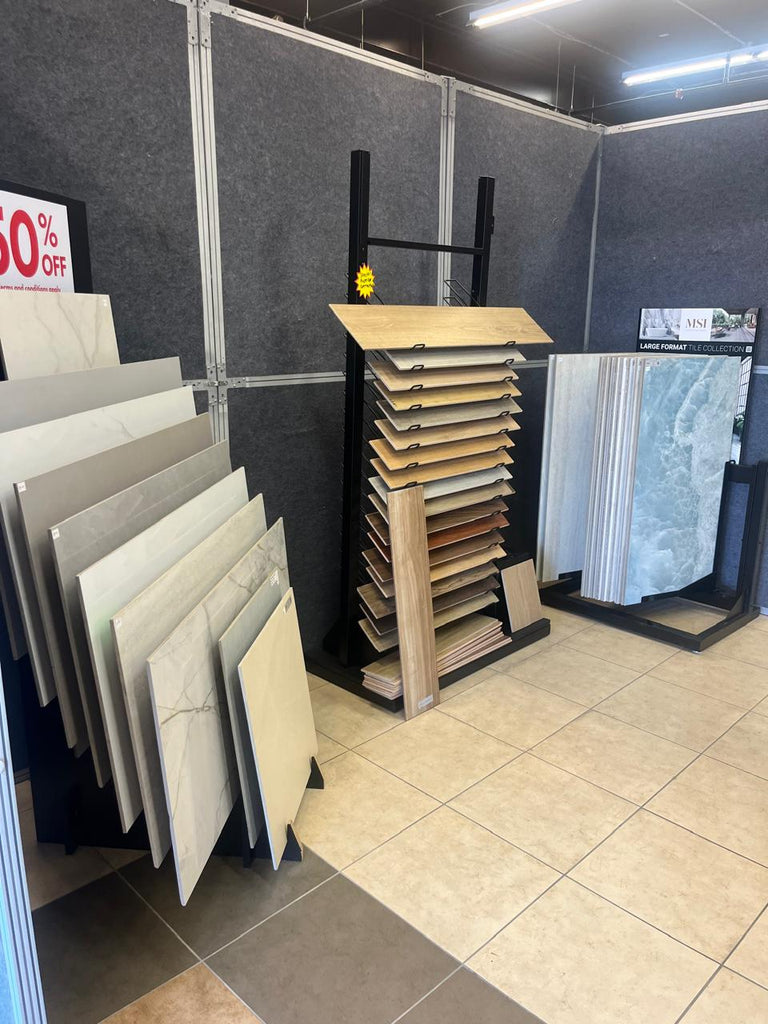
Toronto-area homeowners can visit ARTEZAIB Interiors in Etobicoke to explore flooring and interior finish options in person and discuss their renovation requirements.
Visit ARTEZAIB Interiors
See Your Tile Options in Person
Choosing tile becomes easier when you can see the colour, texture, finish and scale for yourself.
Visit the ARTEZAIB Interiors showroom at:
700 Kipling Ave #300
Etobicoke, ON M8Z 5G3, Canada
Phone: +1 416 252 1522
Explore flooring and interior décor options and speak with the team about your renovation project.
Related post
16
Oct
RECENT POSTS
16.October.2026
Custom Picture Framing in Etobicoke: How It Works, How Long It Takes and What It Costs
0 Comments
16.October.2026
Condo Flooring Installation in Etobicoke: What Your Building Will Ask For
0 Comments